Claude Code Undergoes Major Overhaul
Anthropic has officially announced a complete overhaul of Claude Code for desktop. The new version allows multiple instances of Claude to run in parallel within the same window, significantly improving speed.
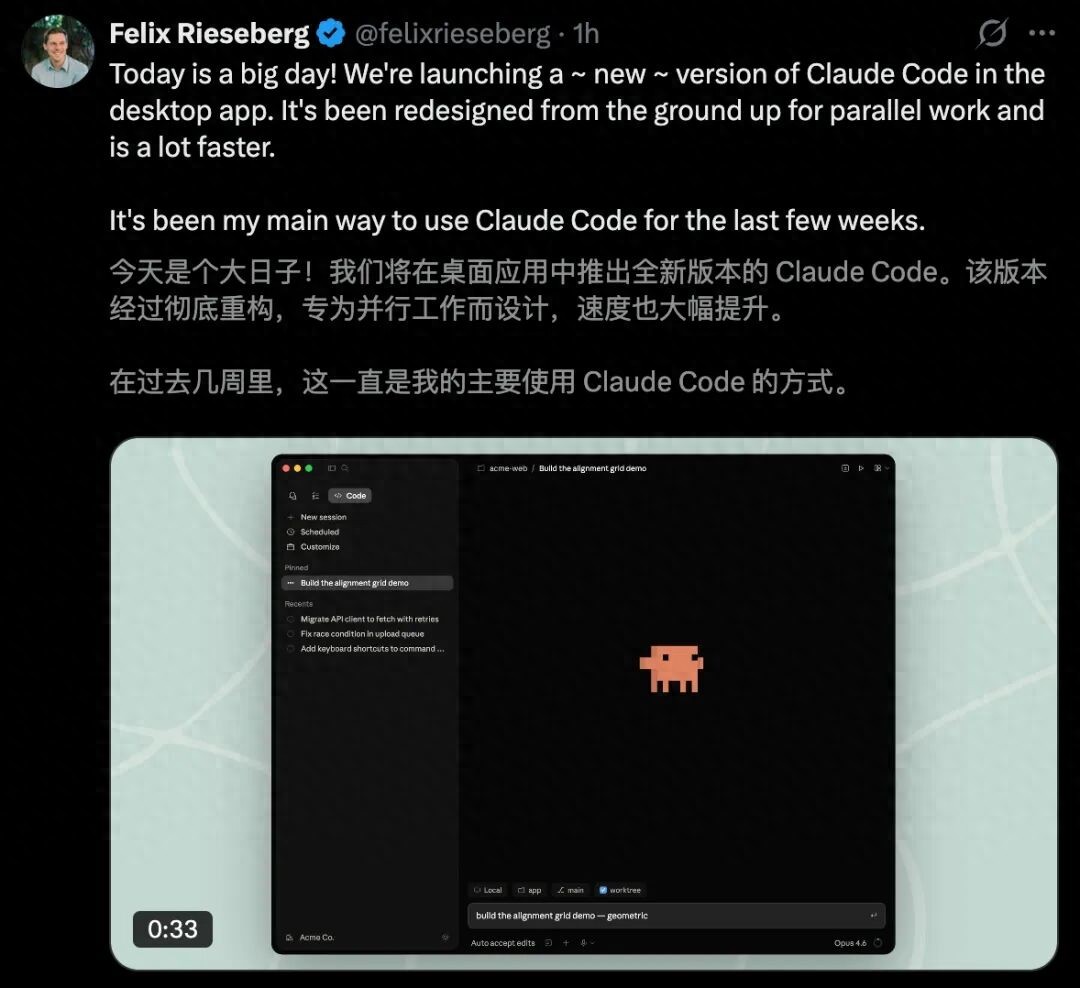
The update introduces a new sidebar for efficient task management, integrates a terminal window for in-app file editing, and features a redesigned diff viewer.
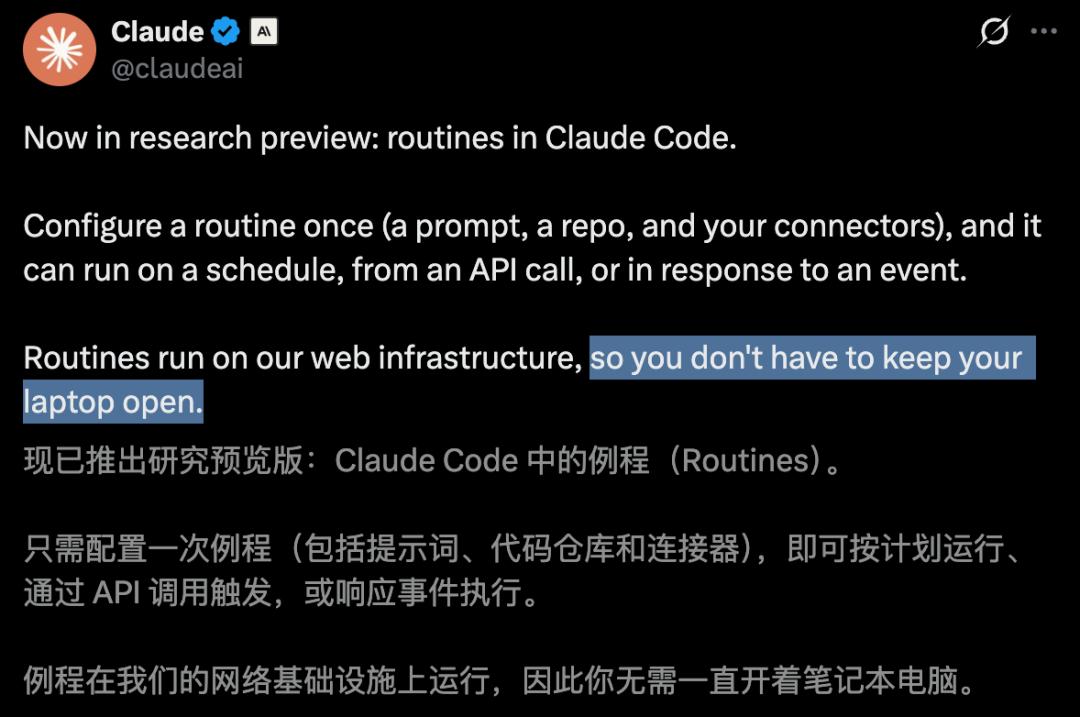
Today, Claude Code also launched the Routines feature, transforming it into a “cloud employee” that can work even when your computer is off. Scheduled tasks, API triggers, and GitHub events are now all supported.
Currently, this is in research preview, available to Pro/Max/Team/Enterprise users.
Daily run limits are: Pro 5, Max 15, Team and Enterprise 25; exceeding these limits incurs additional costs.
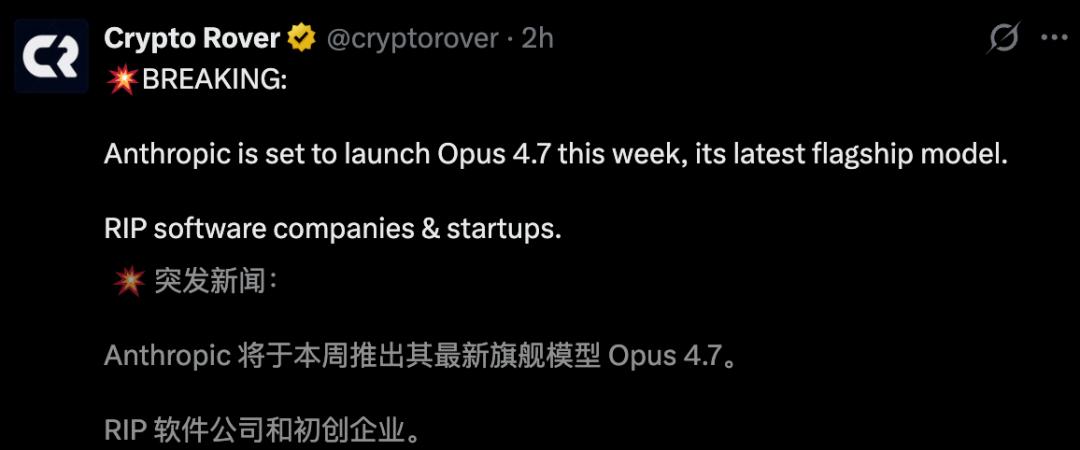
Excitingly, Claude Opus 4.7 is set to launch later this week, along with a new design tool that will directly compete with Adobe and Figma.
Major Enhancements: Built for Parallel Processing
The most notable change in the new Claude Code desktop version is the introduction of the sidebar management system. Developers can run multiple Claude instances simultaneously in the same window, allowing for side-by-side displays. This means you can have Claude fixing bugs in one window while generating test cases in another.
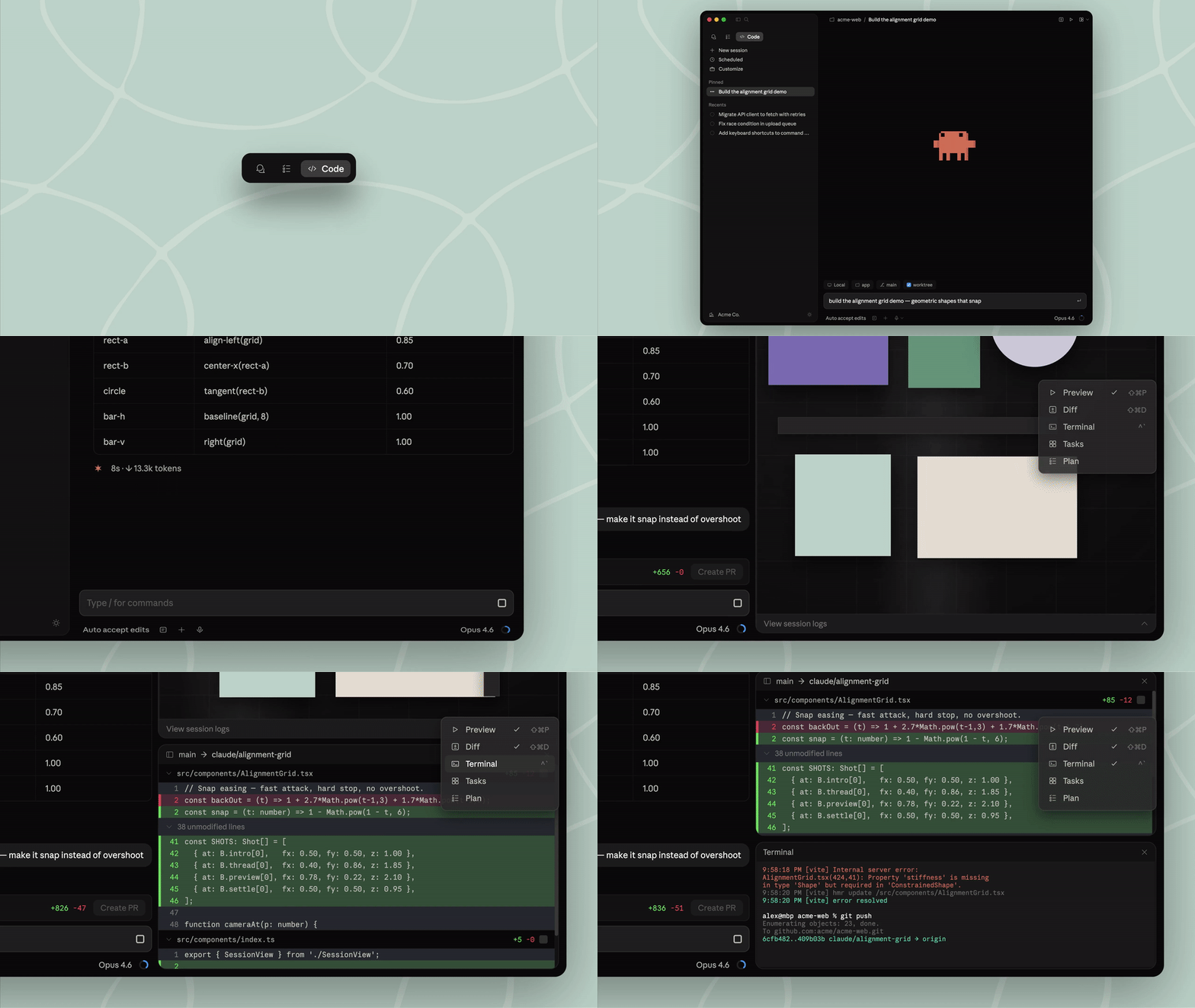
The interface supports high customization, allowing users to freely arrange layouts with simple drag-and-drop actions.
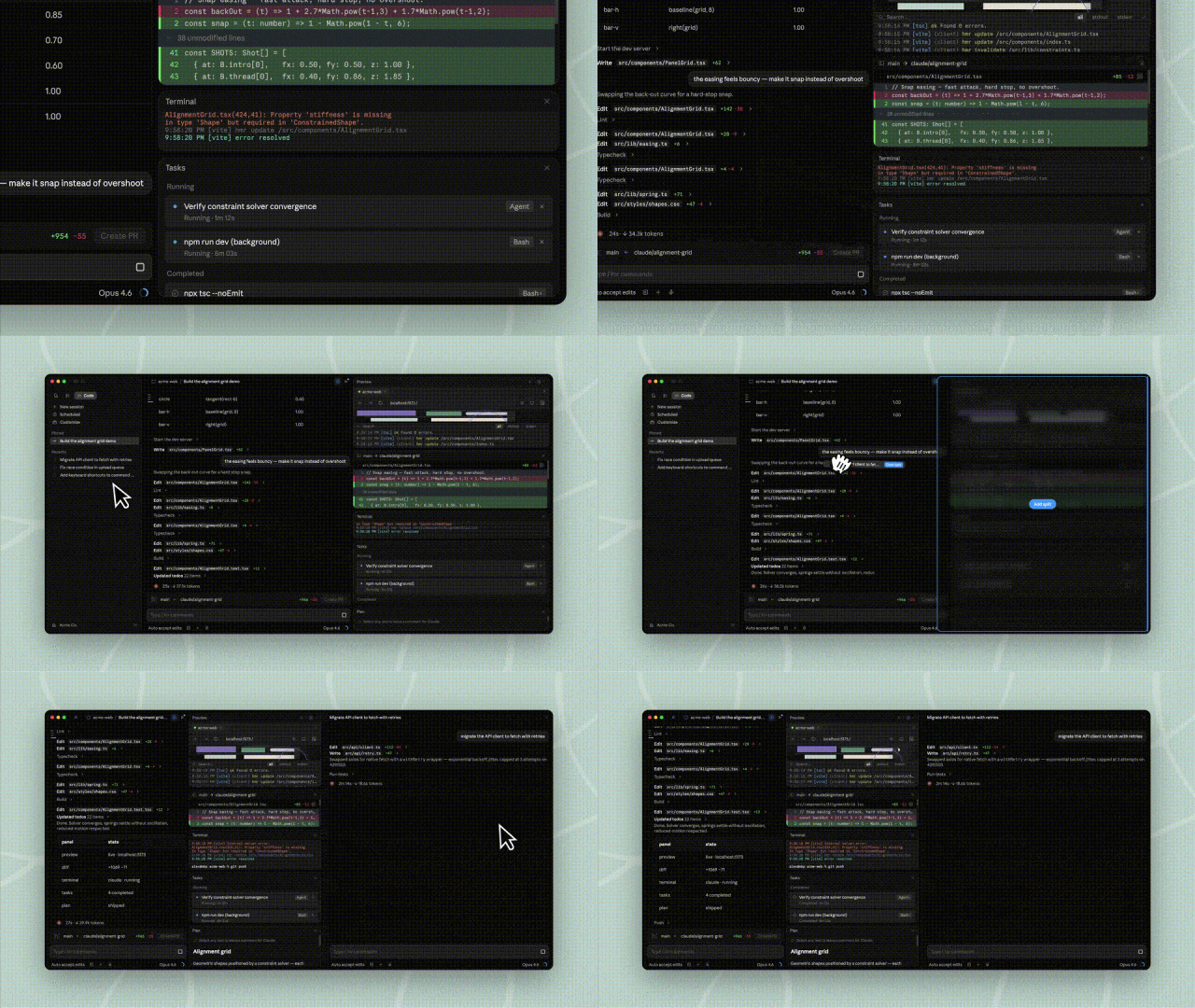
Additionally, Claude Code deeply integrates multiple functionalities, eliminating fragmented operations. It includes a built-in terminal to run scripts and commands directly within Claude, without needing to switch between iTerm and VS Code. Users can also edit code files natively, with the revamped diff viewer making code changes clear and fast.
Complex HTML and technical specifications in PDFs can now be previewed directly in Claude Code. It also supports SSH connections to remote servers, providing a smooth cloud development experience.
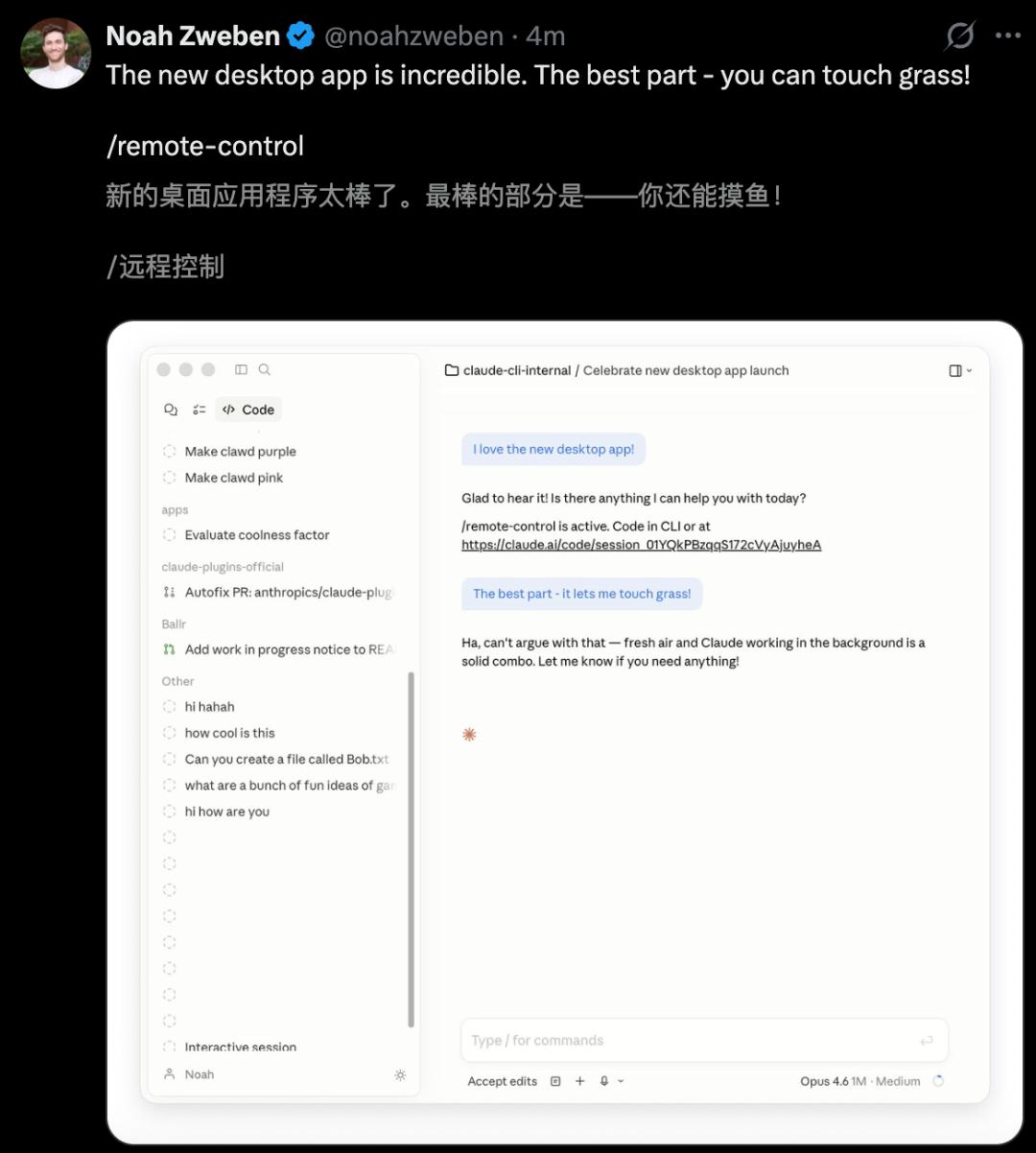
Concerned about disrupting your previous workflow? There’s no need. All CLI plugins used in the command line can seamlessly integrate into Claude Code. It retains the powerful features of the command line while offering the efficiency of a GUI.
Anthropic researcher Alex Albert expressed excitement, stating, “Honestly, with Cowork and Code working together, I hardly need to open any other apps for most tasks, not even the terminal.”
Routines: Automating Tasks
The Routines feature allows Claude Code to operate automatically 24/7 with a single configuration.
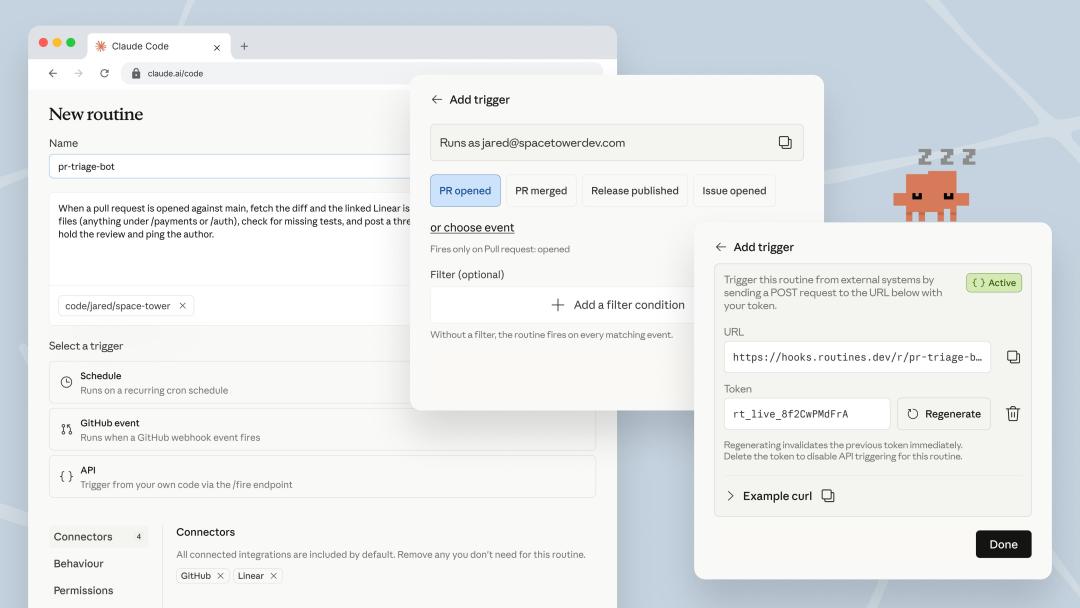
In simple terms, a Routine is a pre-written “work instruction” for Claude Code. You set up three components: prompt, codebase, and connectors, and assign one or more triggers. When a trigger is activated, Claude Code opens a new session on Anthropic’s cloud infrastructure and executes the tasks as instructed.
The key feature is the “cloud” capability.
Previously, automating tasks with Claude Code required a lot of manual setup, including cron jobs, MCP servers, and infrastructure management. Your computer had to be on, and processes had to be alive; any disconnection or sleep would disrupt everything.
Routines eliminate these hassles by running entirely in the cloud, independent of your computer’s status. Each Routine can run in a custom “cloud environment” that you define.
You can easily configure network permissions, environment variables, and API keys directly in the interface. This previously required setting up Docker images, but now it’s just a form option.
Not long ago, Boris Cherny’s viral post about running five Claudes locally and another five to ten on claude.ai/code now seems outdated, as Claude Code itself can now handle multiple sessions in parallel.
Three Trigger Types
The first basic trigger is Scheduled. You provide Claude Code with a prompt and a frequency, and it will execute tasks accordingly. For example, every night at 2 AM, it can pull the highest priority bug from Linear, attempt to fix it, and create a draft PR.
This functionality has existed in the CLI under the /schedule command for some time.
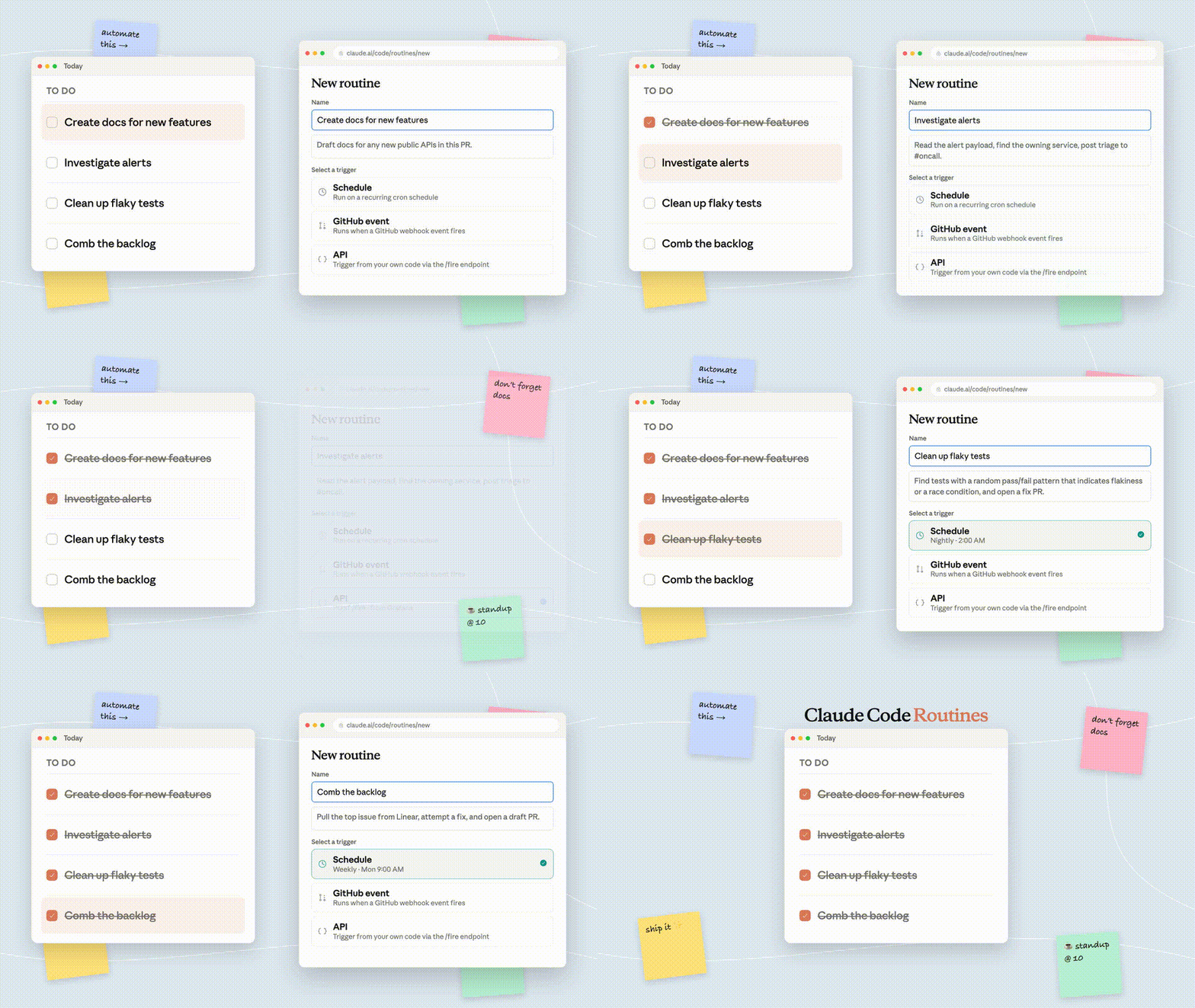
This update renames it to Routine and consolidates it into a single configuration interface. All previously scheduled tasks are now automatically converted into “Scheduled Routines” without requiring migration.
Scheduled tasks can include automatic triaging of new issues, tagging, assigning owners, and sending summaries to Slack.
Integrating with Alert Systems
Each Routine now has its own HTTP endpoint and a dedicated Bearer Token. By sending a POST request to this endpoint with the token, Claude Code can instantly open a new session, incorporating additional user prompts into the original Routine prompt.
For example:
curl -X POST https://api.anthropic.com/v1/claude_code/routines/trig_xxx/fire \
-H "Authorization: Bearer sk-ant-oat01-xxxxx" \
-H "Content-Type: application/json" \
-d '{"text": "Sentry alert SEN-4521 triggered in production, stack trace attached."}'
This feature allows you to integrate Claude Code with your alert systems. If Datadog reports an error exceeding a threshold, you can directly call the Routine API with the alert details. Claude can then pull traces, correlate with recent deployments, identify issues, and draft a fix PR before the on-call team even opens their laptop.
GitHub Integration
The last trigger type is GitHub Webhook. You can subscribe to various GitHub events for a Routine, including pull_request.opened, pull_request.review_comment, push, issues, workflow_run, and discussion events, covering nearly all GitHub activities.
When an event matches, Claude Code will open a new session to work on it. Notably, each PR gets its own session, allowing Claude to continuously update the session with new commits, comments, and CI logs related to that PR.
This means the session remains active and responsive to ongoing developments.
For example, Anthropic provided a powerful use case: when a PR is merged into the Python SDK, the Routine automatically triggers to replicate the changes into the parallel Go SDK, creating a corresponding PR. This keeps both codebases synchronized without manual effort.
The Leaked “KAIROS” Feature
Remember the Claude Code source code leak in late March? Among the features discovered, one stood out: KAIROS.
A persistent background agent capable of autonomously fixing errors and running tasks without human input, even sending push notifications.
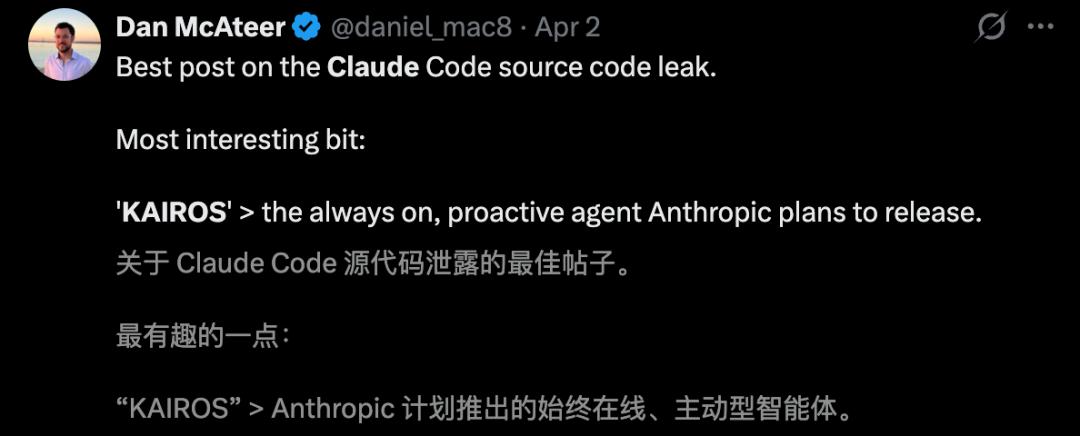
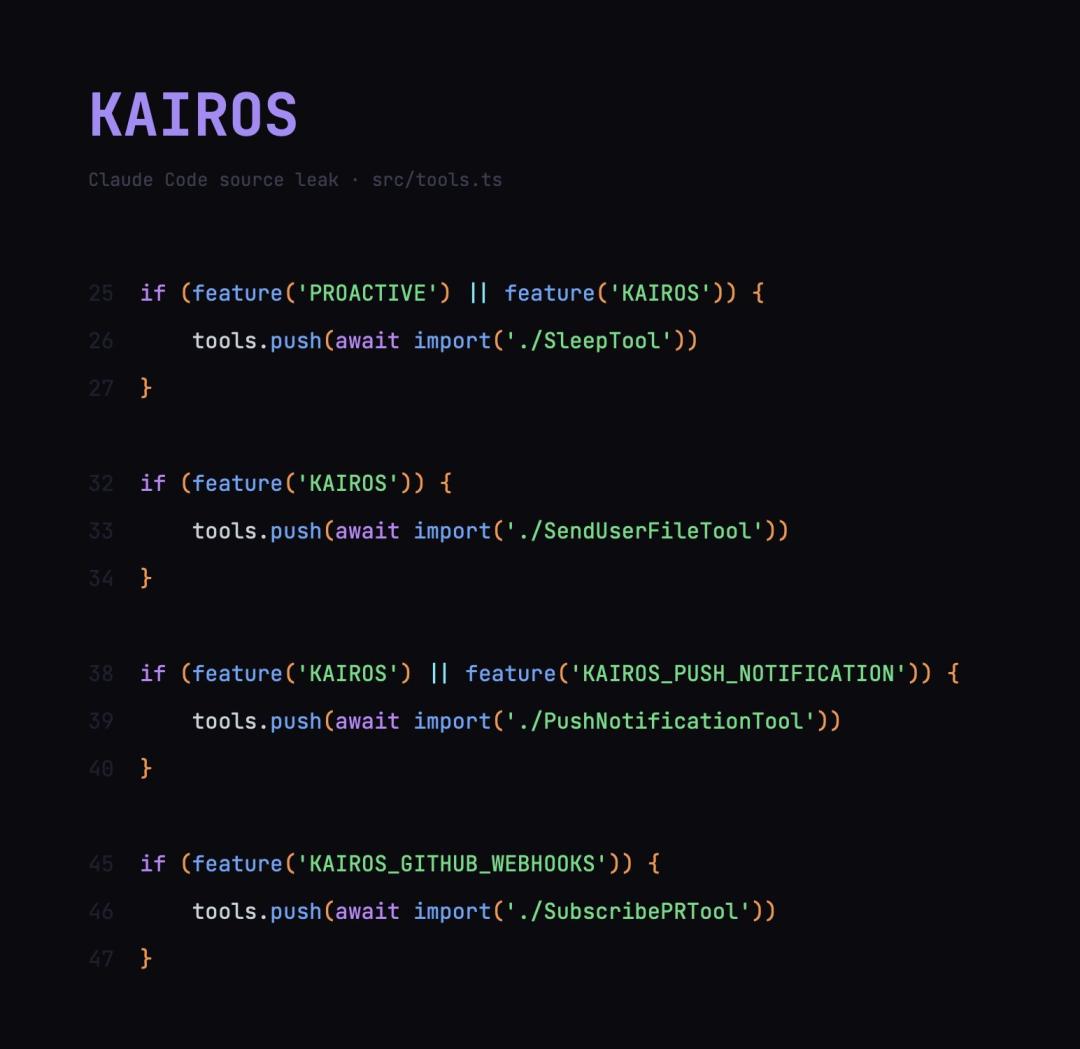
Comparing this to the Routines product page reveals striking similarities:
- “Persistent background agent” → Cloud-hosted mode, running even when the computer is closed;
- “Autonomously fixing errors” → Scheduled triggers pulling the highest priority bugs;
- “No human input required” → API triggers fed directly from monitoring systems;
- “Push notifications” → Each run returns a session URL.
The leaked feature that generated two weeks of discussion has now officially launched as Routines. While Anthropic has not confirmed that KAIROS is the same as Routines, the technical descriptions align closely.
This marks a clean overlap between the leak and the product roadmap over the past year.
Upcoming Launch of Opus 4.7
This week, the AI landscape may be shaken up again by Anthropic’s anticipated release of Claude Opus 4.7.
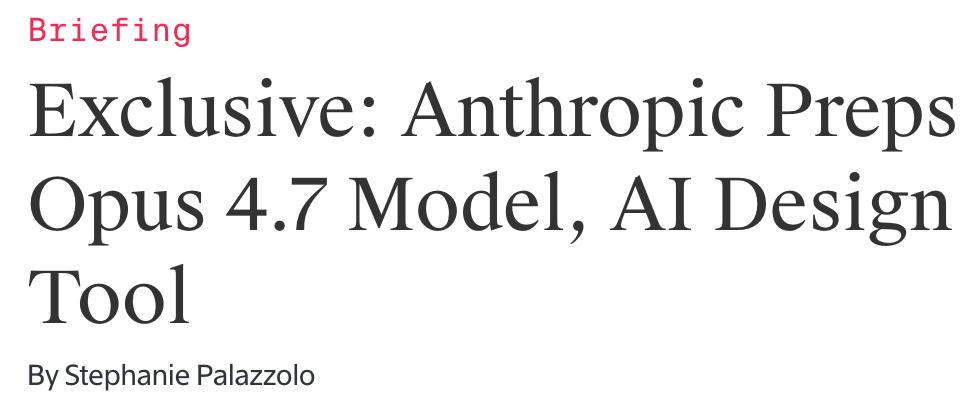
Reports indicate that this flagship model will be released swiftly, and it has been internally registered under the name capybara-v2.
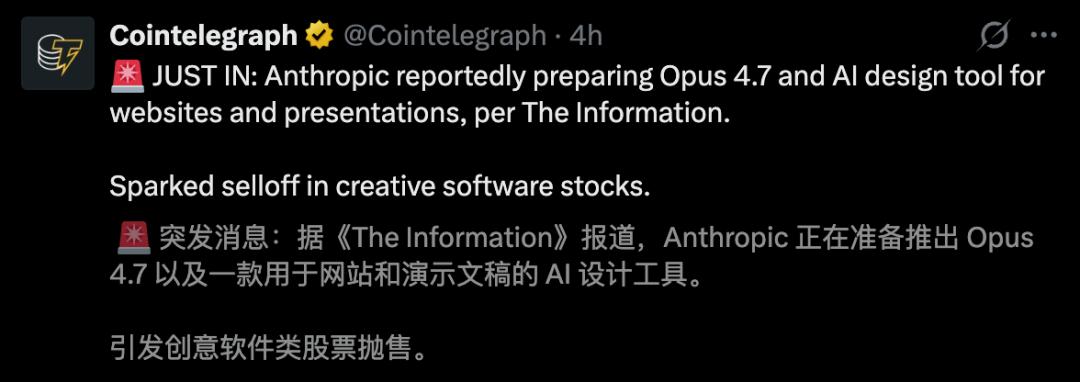
Additionally, a new design tool capable of generating websites and presentations with just a single prompt is expected to debut, significantly lowering the barriers for creative work. This move directly challenges established design tools like Adobe and Figma.
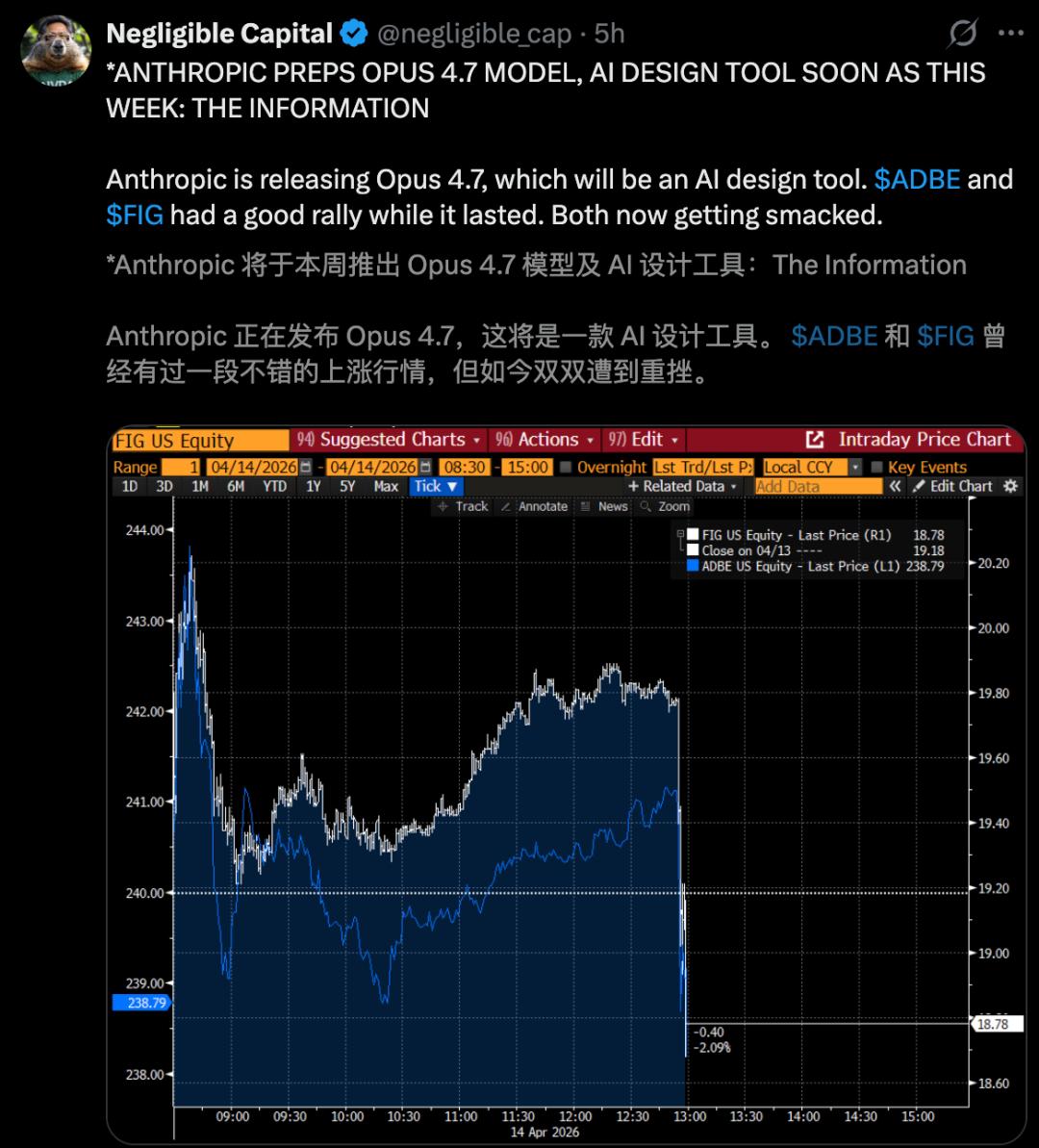
Following this news, stock prices for creative software companies, including Adobe, Wix, and Figma, have already dropped by over 2%.
Rumors suggest that OpenAI’s model codenamed “Potato” may also be unveiled this week.
The competition in Silicon Valley is heating up.
Comments
Discussion is powered by Giscus (GitHub Discussions). Add
repo,repoID,category, andcategoryIDunder[params.comments.giscus]inhugo.tomlusing the values from the Giscus setup tool.